Conference 2025
Location: Dublin, Ireland
Dates: 14th & 15th November 2025
Details
This year the Albert Camus Society conference will be held at the Aungier Street campus of the Technological University Dublin (TU Dublin) where we will be celebrating our 20th anniversary.
Schedule
14 November
Panel 1: ‘Camus, Exile and the Kingdom: Texts and Contexts’
10.00-10.10: TU Dublin Welcome Address
10.10-10.40: ‘Albert Camus: Secular Saint or Good-Willed Colonizer? A Reassessment of Exile and the Kingdom' by Dr Aoife Connolly (TU Dublin)
10.40-11.00: Break
11.00-11.30: ‘Camus, Biesta and Flirting with the World: Educational Encounters and the Event of Subjectification’ by Dr Ciarán O Gallchóir (Maynooth University)
11.30-12.00: Questions and Answers for Panel 1
12.00-14.00: Lunch
Panel 2: ‘Camus, the Sacred and Christianity’
14.00-14.30: ‘The Distinction Between the Sacred and the Tragic’ - Nick Anagnostopoulos (PhD Student, National and Kapodistrian University, Athens)
14.30-15.00: ‘A Genesis of the Sense of the Sacred in Camus’s Early Writings (1932–1934)’ - Sumin Jang (PhD Student, University of Paris)
15.00-15.30: ‘Faith and Absurdity: Revisiting James Woelfel’s Camus: A Theological Perspective Fifty Years On’ - Dr Eric Berg (University of St Thomas, Minnesota)
15.30-16.00: Questions and Answers for Panel 2
16.00-16.30: Break
Panel 3: ‘Camus and His Philosophical Precursors’
16.30-17.00: ‘Camus and Rousseau: Unexpected Affinities’ - Prof. Denise Schaeffer (College of the Holy Cross, Massachusetts)
17.00-17.30: ‘Camus contra Hegel – Revolt and the Discourse on the Philosophy of History’ - Dr Dominik Kulcsár (Slovak Academy of Sciences, Bratislava)
17.30-18.00: Questions and Answers for Panel 3
15 November
Panel 4: ‘Camus and an Absurd Miscellany’
9.30-10.00: ‘An Applied Study of the Theme of Revolt as Seen in the Exhibit ‘Banlieues chéries,’ Musée de l’histoire de l’immigration' by Prof. Meaghan Emery (University of Vermont)
10.00-10.30: ‘Camus and the Grotesque’ by Dr Kimberly Baltzer-Jaray (King’s University College, Canada)
10.30-11.00: Break
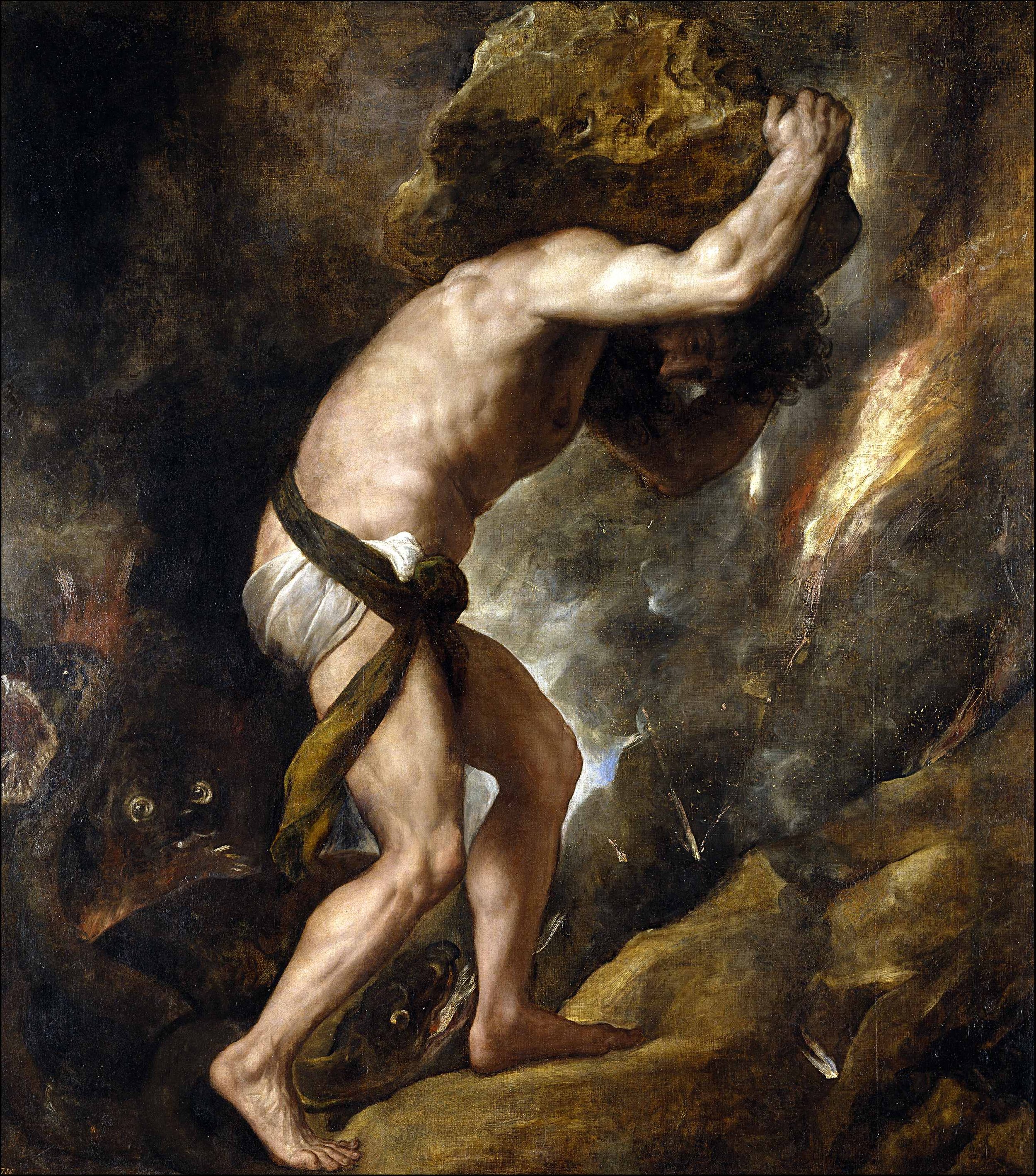
11.00-11.30: ‘Revisiting Sisyphus: The Importance of Fluidity in the Absurd’ by Dr Ivan Nyusztay (ELTE University of Budapest)
11.30-12.00: ‘The Sleeping and the Sleepless in Albert Camus's Philosophical Literature’ by Dr Simon Lea (Independent Researcher, London)
12.00-13.00: Questions and Answers for Panel 4
13.00-15.00: Lunch
15.00-15.30: ‘Jean-Baptiste Clamence and the Fall of Empathy, Part II’ by Dr Peter Francev (Victor Valley College, California)
15.30-16.00: Questions and Answers
16.00-16.30: Final Thoughts and Conference Venue Selection for 2026
Abstracts
Nick Anagnostopoulos: ‘The Distinction Between the Sacred and the Tragic’
The philosophical and literary thought of Albert Camus is deeply concerned with ethics, the finitude of human existence, the inner longing for coherence and meaning, and the imperative to live life to its fullest. Central to his moral reflection are the concepts of resignation and rebellion. The absence of a paternal figure, financial hardship, and a serious illness from an early age shaped the character of the French Algerian writer and contributed to his quest for evidence that life, in its present condition, possesses inherent beauty. For Camus, this beauty was found not in transcendence but in the Algerian landscape and the sacredness of Mediterranean nature. From his school years onward, he had already formulated a considered perspective on the relationship between Christianity and the world as a natural whole, understanding it in terms of the distinction between what he termed the tragic and the sacred. This distinction permeates his entire body of work. In this essay, we examine Camus’ relationship with Christianity, his conceptualization of the sacred and the tragic, and the problem of evil, a problem for which he, at least in part, attributes responsibility to Christianity itself.
Eric B Berg: ‘Faith and Absurdity: Revisiting James Woelfel’s Camus: A Theological Perspective Fifty Years On’
In this talk I will revisit James Woelfle’s (1937- present) classic book Camus: A Theological Perspective published in 1975 by Abingdon Press and place in into a larger scholarly framework.
Woelfel was appointed Professor of Philosophy and Religion at the University of Kansas in 1966 where he taught across several departments until his retirement in 2010. His Camus book was published in 1975 and although initially suffering critical reviews, the book grew to be a significant offering in the area of Camus studies, especially for scholars who work on theological and religions questions raised by Camus.
Below you will find the larger framework of categories I developed and I will discuss his text in relation to all four “waves” of Camus scholarship as I call them. The four waves are:
The Foundational Period (1940s–1960s)
Theological and Ethical Engagement (1970s–1980s)
Poststructuralist and Literary Reinterpretation (1990s–2000s)
Global, Gender, and Postcolonial Camus (2010s–Present)
The Plague has its own wave (2019 COVID)
Commemorative and Retrospective Scholarship (2020s–2025)
The categories are not exclusive, as one can easily find examples of “theological engagement” with Camus’ work in the 1950s for example Hanna’s “Camus and the Christian Faith’ from 1958, I am delineating dominate trends and significant changes in trajectory in the study of Camus. Woelfel’s text is a fine example of the second wave of Camus scholarship. I also offer two subcategories for our time as it seems appropriate to address the commemorative works coming out and COVID-19 launched a whole round of scholarship on The Plague independent of the other works.
Aoife Connolly: ‘Albert Camus: Secular Saint or Good-Willed Colonizer? A Reassessment of Exile and the Kingdom’
Many critics have effectively ignored Albert Camus’s Algerian origins in favor of universalist readings of his works. As Germaine Bree noted in 1960, a legend surrounding the author has tended to transform him into “une sorte de saint laïque” [a kind of secular saint].[1] Conversely, scholars have periodically drawn attention to Camus’s roots in harsh postcolonial critiques. His most famous critics include Conor Cruise-O’Brien, Edward Said, and Albert Memmi, who in 1957 labelled Camus a “colonisateur de bonne volonté” [good-willed colonizer]. While more recent analyses, for example by John Foley or Michel Onfray, seek to rehabilitate the author, this paper reappraises the two opposing views of Camus – as a good-willed colonizer or secular saint, by examining tensions that arise in his fiction, specifically a collection of his short stories, L’Exil et le Royaume (1957) [Exile and the Kingdom].
[1] Germaine Bree, “Camus”, The French Review 33, no. 6 (May 1960): 542.
Meaghan Emery: ‘An Applied Study of the Theme of Revolt as Seen in the Exhibit ‘Banlieues chéries,’ Musée de l’histoire de l’immigration’
Thanks to a Fulbright US Scholar award (2024-2025), I was able to pursue a two-part environmental research project on the topic of the transition to resilient urban communities in France, with a preliminary focus on metropolitan Rennes, followed by a study of the Olympic Village in the northeastern suburbs of Paris. In these urban centers, primarily characterized by dense housing built of concrete, temperatures can soar to more than 10 degrees Celcius (50˚F) higher than the rural countryside due to the absorption and radiation of heat from the built surfaces, including at night. In both places, local governments are actively engaged in policymaking designed to increase the livability of their cities as temperatures become dangerously hotter. As the theoretical basis for my study, I chose the existentialist theory of rebellion formulated by Albert Camus -- in short, the fundamental sense of justice that compels us either as individuals or collective groups to assume our freedom and refuse the violation of our human rights. My six-month adventure concluded with a visit to the National Museum of the History of Immigration in Paris to follow a guided tour of the exhibit “Banlieues chéries,” or “Beloved Housing Estates.” Moving from the first room on the “bittersweet” history of Paris’ northern outskirts through rooms titled “activist estates” and “central estates” and beyond the media and music studio, visitors ended the tour in a room called “Maison de quartier,” or “neighborhood community center.” There, people could write and/or read people’s responses to the following prompt on slips of paper taped to the walls: “In my dream estate, I can … .” This paper will focus on what is behind the response recorded on several of these slips of paper: In my dream estate, in addition to feeling safe while outside, “… I can breathe clean air, far from pollution”; “… I can benefit from cool air thanks to the trees planted along the streets”; “I can ride my bike without risking my life”; “… I can smell the scent of jasmine, hear children’s laughter, and breathe in peace.” Because of a history of socioeconomic segregation, the exhibit and the signatures indicate that ethnic minorities are being disproportionately affected by climate change. Although increased public awareness does not immediately translate into political engagement or even public trust in the government, environmental racism is gaining a place in the popular conscience and, therefore, organized activism, which I will analyze in this paper.
Peter Francev: ‘Jean-Baptiste Clamence and the Fall of Empathy, Part II’
At the 2024 Albert Camus Society Conference I presented a paper entitled ‘Jean-Baptiste Clamence and the Fall of Empathy’ in which I examined Jean-Baptiste Clamence, the protagonist from The Fall, from the perspective of empathy as related through the stories that he revels to the unnamed bar patron in the seedy ‘sailor’s bar’ Mexico City. For the sake of time, I was only able to cover the first two nights of the four-night encounter between the protagonist and his interlocutor-antagonist. The purpose of this paper is to continue with the analysis of Clamence through the third night whilst examining Clamence’s attitude towards the role of empathy in his life.
Dominik Kulcsár: ‘Camus contra Hegel – Revolt and the Discourse on the Philosophy of History’
The goal of my presentation is to critically evaluate Albert Camus’s partisan critique of Hegel. Camus’s infamous critique has been subjected to endless debates, with the initial quarrel with Jean-Paul Sartre and Francis Jeanson shaping the subsequent interpretations of Camus’s stance. The prevailing view, held, for example, by William McBride, is that Camus misunderstands Hegel, for he sees in his philosophy of history the source of nihilistic historicism, responsible for the totalitarianisms of the 20th century. I aim to challenge both this dominant narrative and the customary view of Camus as a radical anti-Hegelian. By putting both thinkers into a critical dialogue, I aim to highlight the dialectical and Hegelian aspects of Camus’s thought, thereby gaining a nuanced understanding of his views on the relationship between the subject and historical circumstances. I begin from the premise that Camus also sees history as the story of freedom. However, he mistakenly assumes that Hegel reduces the individual to an abstraction by interpreting all historical events as justifiable by the cunning of reason. In doing so, Camus, ignores the “unhappy consciousness” and Hegel’s theory of revolt, found in the “Introduction” to the Lectures on the Philosophy of History, and concludes that the telos of history authorizes success as the ultimate criterion for action. First, I will argue that, for Hegel, consciousness is neither passive nor abstract, but an active participant in the development of history, where negation propels history forward. Second, I will compare their accounts of human nature, to show that both Camus and Hegel see human nature as developing. Third, I will demonstrate that Camus’s charge against Hegel – destroying all moral values and principles – is mistaken.
Sumin Jang: ‘A Genesis of the Sense of the Sacred in Camus’s Early Writings (1932–1934)’
At the center of recent Camusian studies, discussions on “the sense of the sacred in Albert Camus” have multiplied. Because of his position as a “humanist atheist,” his attitude toward the notion of the sacred reveals a certain ambivalence: a refusal of the vertical sacred, but an acceptance of a horizontal one. Yet before arriving at a clearly defined position, there exists in Camus’s adolescent writings a period of hesitation and exploration.
From the age of seventeen, having discovered his literary vocation, Camus began to accumulate his early texts. The Pléiade edition gathers them under the title “Premiers écrits (1932–1936).” Among them, this study focuses on the following texts: “Intuitions” (October 1932), “L’Art dans la Communion,” “La Maison mauresque” (April 1933), “La Méditerranée,” “Voilà ! Elle est morte…,” “Perte de l’être aimé,” “Accepter la vie…,” “Dialogue de Dieu avec son âme” (October 1933), and “Le Livre de Mélusine” (1934).
What interests us in these texts is the emergence of a consciousness of an original aspiration within the young Camus himself. This aspiration—arising as a form of intentionality born from weariness and hesitation—turns toward nature, humanity, and art. We will explore this persistent aspiration, accompanied, on its reverse side, by pain and a sense of lack, in the light of the sacred as it later appears in his mature works. Its orientation oscillates between transcendence and immanence, between verticality and horizontality. Yet its value as a creative resource endures throughout his later writings.
This study aims to show that, from its earliest formulations, the notion of the absurd in Camus already stands radically apart from nihilism.
Simon Lea: ‘The Sleeping and the Sleepless in Albert Camus's Philosophical Literature’
Sleep and sleeplessness are recurring themes in Camus' philosophical and literary output. Indeed, much of the key action takes place when people are asleep in bed -- or should be. In this paper, I give an overview of four different ways Camus uses the ideas of sleep, sleeplessness, somnambulism and awakening in his work. I then offer a suggestion for using how Camus refers to sleep in his work to better understand his conception of the Absurd. My focus here is not on what the Absurd teaches us but how the Absurd teaches us.
Ivan Nyusztay: ‘Revisiting Sisyphus: The Importance of Fluidity in the Absurd’
As Camus notes in the last section of his The Myth of Sisyphus, ‘The lucidity that was to constitute his torture at the same time crowns his victory’ (La clairvoyance qui devait faire son torument consommé du même coup sa victoire). As Camus tells us, Sisyphus is ‘superior to his fate. He is stronger than his rock’ (il est supérieur à son destin. Il est plus fort que son rocher). In my reading, Sisyphus’s avowed strength championed so steadfastly by Camus turns out to be a cloak for the underlying weakness. Caligula is more straightforward about this incapacity when he complains about being powerless to possess the moon, his desire for the impossible, or overrule the motion of the earth (his rocks), ‘I can’t have the sun set in the east’ (je ne puis faire que le soleil sa couche à l’est). Nevertheless, as Sisyphus, he will never give up the desperate search for the impossible. Rereading The Myth in the light of the play further confirms our qualms about Sisyphus’s unique powers and achievements. Neither does the protagonist of The Stranger appear ‘victorious’ in any sense, since he is grotesquely depersonalized throughout the novella and eventually sentenced for his crime.
Yet in the same section of the treatise, we find another, easily bypassed, potential source of strength: water. The rock here is set against water, the merciless punishment against hope and benediction. Camus’s portrayal of Sisyphus’s toils therefore appears in a different light as the focus shifts from rock to water. The latter gains utmost importance not only as an element on earth Sisyphus dotes on but as a factor that affects the constitution of selfhood and the whole concept of homo absurdus. There are then two Sisyphuses. One discovering the utter futility of his endeavours and embracing a radical Cynicism regarding man’s everyday aspirations. But, at another level, there is the other Sisyphus, who turns fluid and demonstrates the failures of Cynical reason and the need for relationality.
Ciaran O Gallchoir: ‘Camus, Biesta and Flirting with the World: Educational Encounters and the Event of Subjectification’
This paper explores what is educational about Camus' "The Adulterous Woman" by examining Janine's encounters through the Algerian desert using Biesta's framework of world-centred education. While educational philosophy has largely overlooked Camus' contributions, his insights offer profound resources for contemporary educational theory, particularly regarding how individuals encounter the world and claim their subjectness within it.
Drawing on Biesta's critique of learnification and his emphasis on subjectification as education's fundamental purpose, this analysis positions Janine's story as an exemplar of both the possibilities and perils of educational encounters. Janine's two ascents to the fort's rooftop reveal how encountering the world can simultaneously call individuals toward freedom and overwhelm them when adequate educational support is absent. Her failure to sustain the subjectification opened by her desert encounters illustrates the dangers of what Biesta terms "self-objectification" in an era of learnification - the tendency to retreat from the world's call rather than learning to live as a subject within it.
The paper argues that Camus' rebel - the individual who learns the art of living in the absurd rather than seeking transcendence from it - closely parallels Biesta's vision of the educated subject who exists "in and with" the world. Through close reading of Janine's experiences, the analysis examines the relational dynamics between student, teacher, and world that enable or constrain the "event of subjectification." This approach demonstrates how Camus' literary works can illuminate fundamental educational questions about freedom, responsibility, and the formation of subjectivity.
The analysis reveals how educational encounters require attention to both existential and material dimensions of world-relation, challenging purely anthropocentric approaches to learning. It is hoped that this paper can build towards debates regarding climate education, more-than-human pedagogies, and how educational approaches should honour both human agency and our relational interdependence with material worlds.
Denise Schaeffer: ‘Camus and Rousseau: Unexpected Affinities’
In his analysis of the French Revolution in L’Homme Revolté (The Rebel), Camus lays a significant portion of responsibility for the Revolution’s violent excesses at the feet of Jean-Jacques Rousseau, and the Social Contract in particular. Camus is especially critical of Rousseau’s concept of the General Will, which he argues sets the stage for modern totalitarianism. Camus is hardly alone in labeling Rousseau a proto-totalitarian, but this paper is not concerned with determining the accuracy of Camus’s characterization or adjudicating debates about Rousseau’s influence on the French Revolution (see, e.g. Foley 2022). Rather, the goal of this essay is to elucidate some significant and somewhat surprising affinities between Camus and Rousseau that emerge when we look beyond Camus’s discussion of the Social Contract. Specifically, I will discuss the affinities between Rousseau’s ideas about pity and self-consciousness, and Camus’s effort to articulate the origins and ethical significance of the human capacity to revolt.